
Articles
Potentiostat parameters and specifications explained
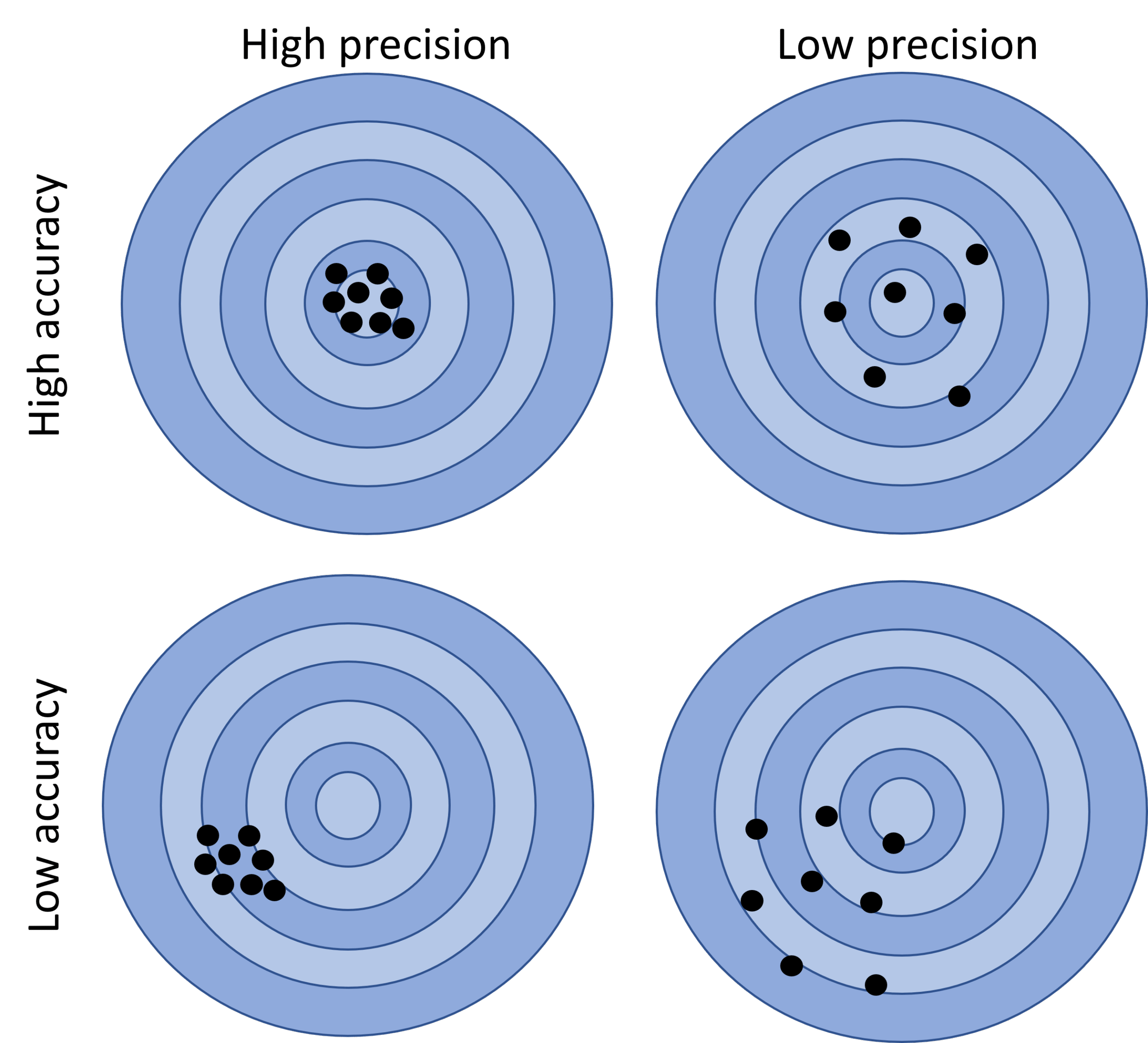
The specifications of potentiostats contain many parameters. If you are in doubt about the meaning of a certain parameter, worry no more. Below you will find an explanation for the...
EmStat4M Altium symbol and footprint
The ZIP file contains an Altium library with EmStat4M footprint and symbol

Changing Wireless Communication Settings for OEM
This tutorial describes how to change the settings of the LAIRD BT900 Wireless communication module on PalmSens devices for OEM.
EmStat4M Communication Protocol V1.0
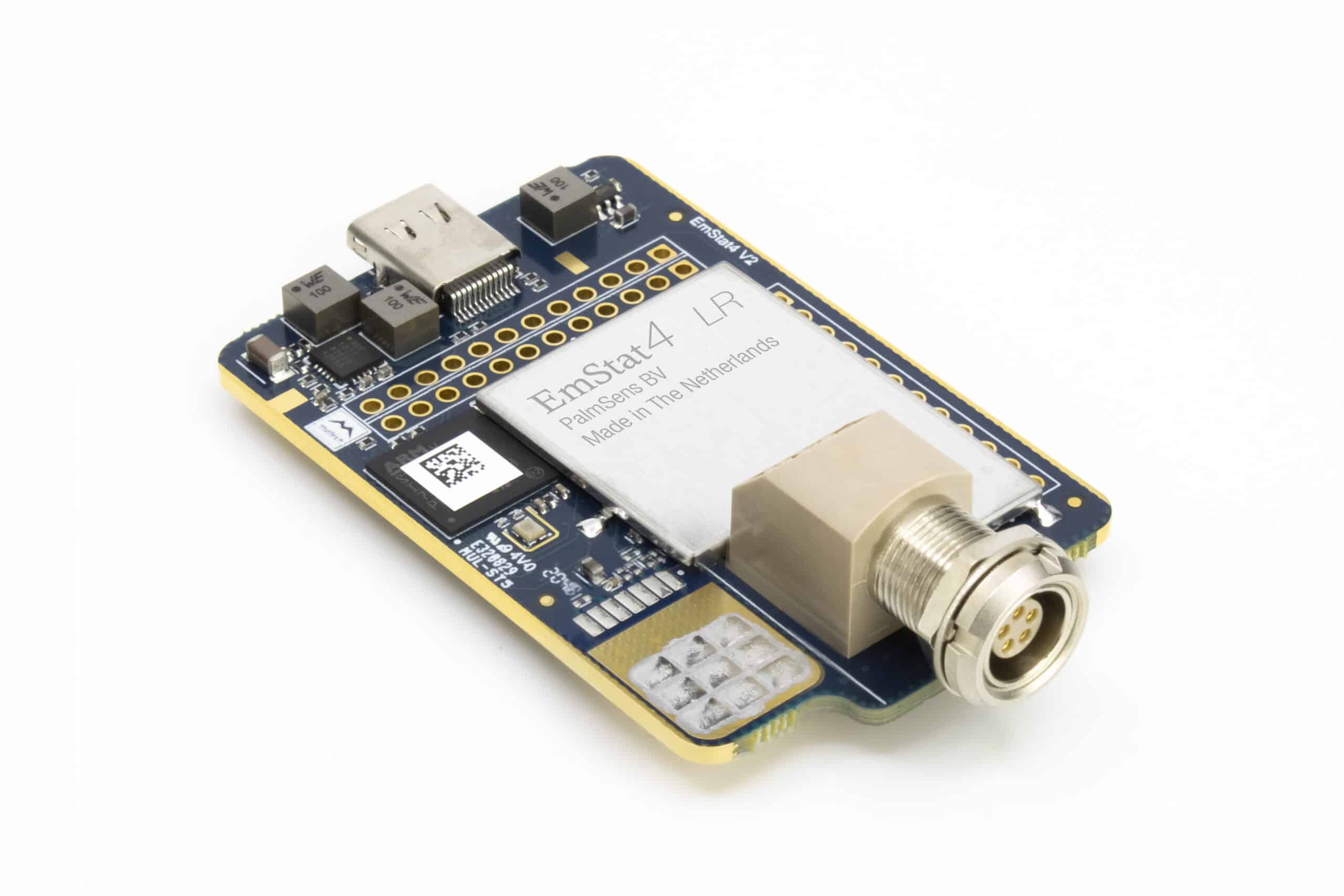
Describes how to communicate with the EmStat4M directly and how to send MethodSCRIPTS.
Linear Sweep Voltammetry (LSV)
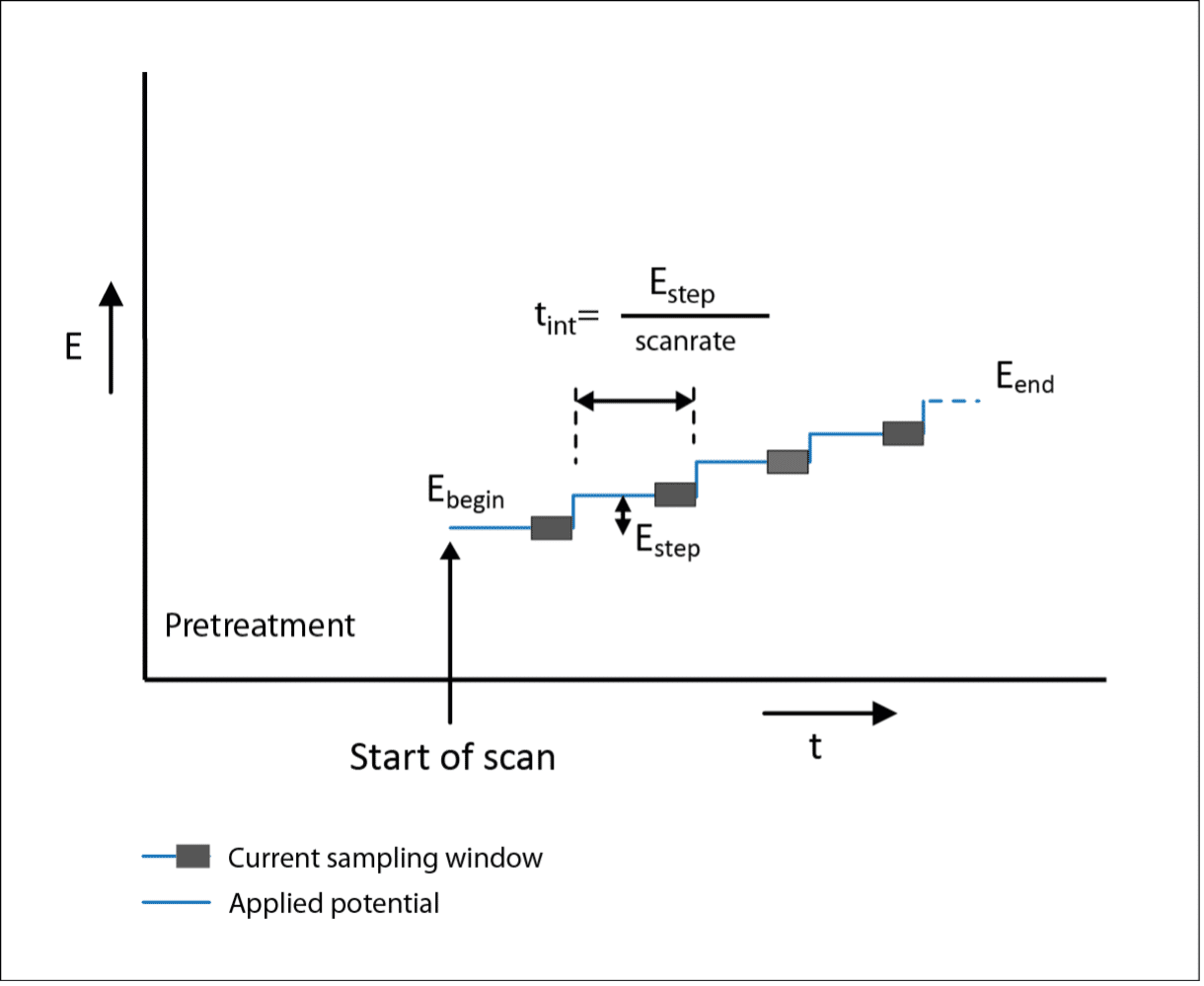
Linear Sweep Voltammetry is also known as Linear Polarization. In Linear Sweep Voltammetry a potential scan is performed from the begin potential, E begin, to the end potential E e...
Time scan
Time scan usually refers to an AC (Alternate Current) measurement where the frequency is fixed, and the Impedance is measured versus time. Sometimes it is called as “Time Sca...
EIS potential scan or current scan
EIS Potential scan or current scan is an electrochemical technique that can be applied with any EIS-capable PalmSens potentiostat. ‘E dc scan’ means that multiple measu...

Mixed Mode (MM)
Mixed Mode (MM) is an electrochemical technique that can be applied with the following instruments from PalmSens: PalmSens4 EmStat4S MultiPalmSens4 ...
Stripping Chronopotentiometry (SCP or PSA)
Stripping Chronopotentiometry (SCP or PSA) is a sensitive analytical technique. Before the SCP measurement starts a deposition stage at the deposition potential E dep is required.
MultiStep Potentiometry (MP)
MultiStep Potentiometry (MP) is an electrochemical technique that can be applied with the following instruments from PalmSens: PalmSens4 EmStat4S MultiPalmSens4 ...
Chronopotentiometry (CP)
Chronopotentiometry (CP)is an electrochemical technique in which a controlled current, usually a constant current, is caused to flow between two electrodes; the potential of one el...
Linear Sweep Potentiometry (LSP)
Linear Sweep Potentiometry (LSP) is an electrochemical technique that can be applied with the following instruments from PalmSens: PalmSens4 EmStat4S MultiPalmSens4 Linear Sweep ...
Multiple-Pulse Amperometric Detection (MPAD)
Multiple-Pulse Amperometric Detection (MPAD) is an electrochemical technique that can be used when higher sensitivity is required. Using pulses instead of constant potential migh...
Pulsed Amperometric Detection (PAD)
Pulsed Amperometric Detection (PAD) is a technique used to detect certain classes of compounds, notably sugars and polyalcohols, among others. These compounds tend to foul the surf...
Fast Amperometry (FAM)
Fast Amperometry (FAM) is a form of amperometric detection with very high sampling rates or respectively very short interval times. Signal applied during Fast Amperometry ...
MultiStep Amperometry (MA)
MultiStep Amperometry (MA) is an electrochemical technique which simply allows the user to specify the number of potential steps they want to apply and how long each step should l...
Chronocoulometry (CC)
Chronocoulometry is an electrochemical technique during which a potential is set. The current is recorded and shown in a graph versus the time.
Zero Resistance Ammeter (ZRA)
Zero Resistance Ammeter (ZRA) is an electrochemical technique that measures the current flowing through it without adding any resistance. This means the current is measured without...