


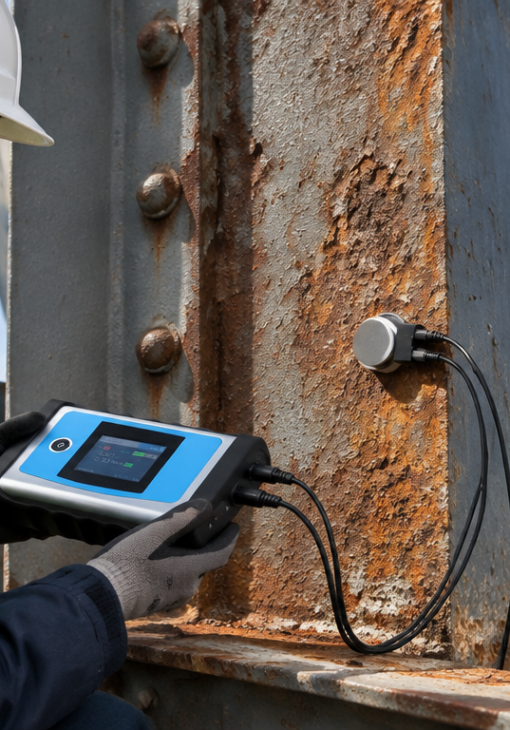
A potentiostat for corrosion research controls the potential of a metal sample against a reference electrode and measures the current that flows as the metal corrodes. From that current you calculate the corrosion rate, see whether a metal is likely to pit, and follow how a protective coating breaks down.
Electrochemical tests give those answers within hours. A salt-spray test on the same coating can take months.
This page covers the techniques a corrosion potentiostat has to run, the specifications that matter for corrosion work, and which PalmSens instruments fit which kind of research.
Potentiostats for corrosion research
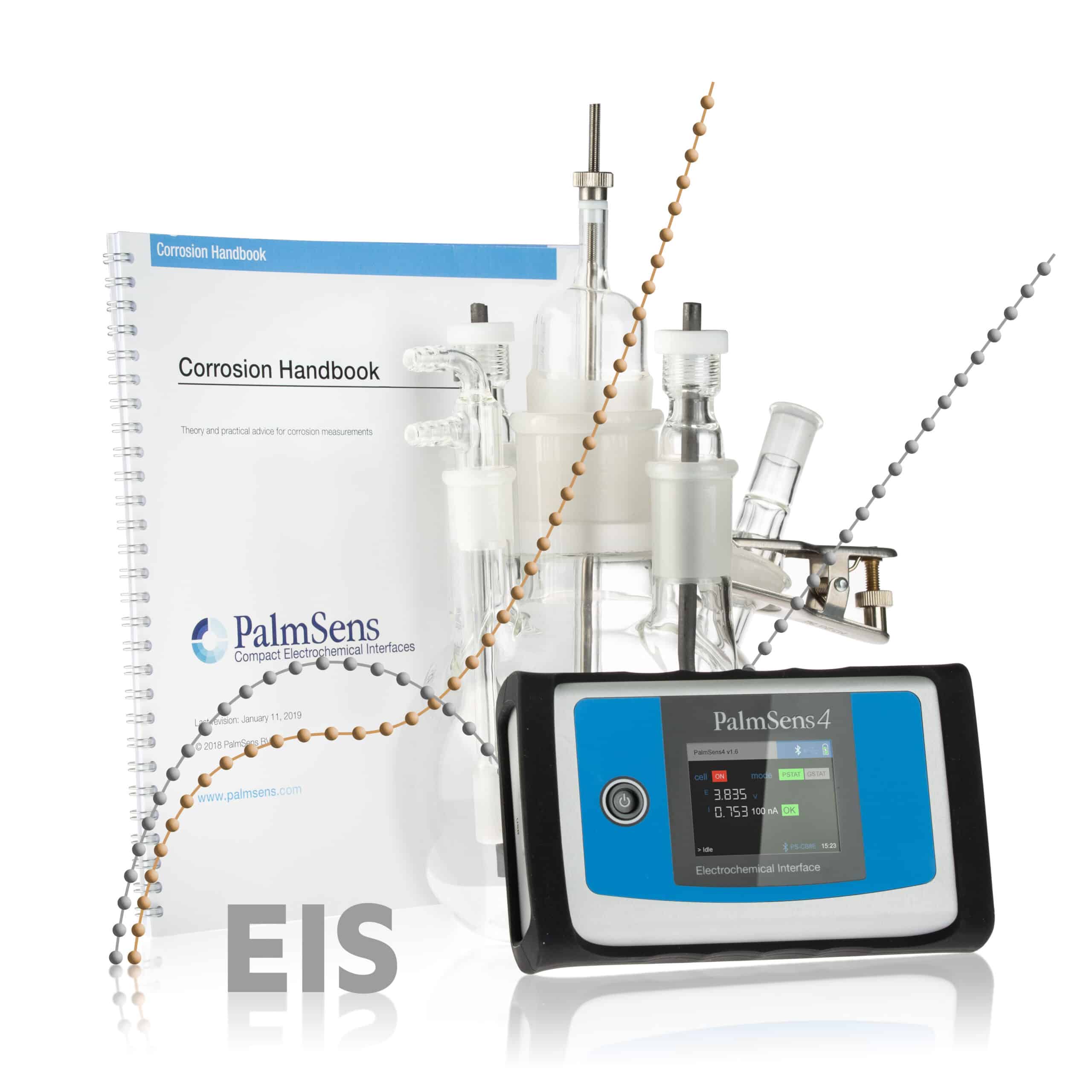
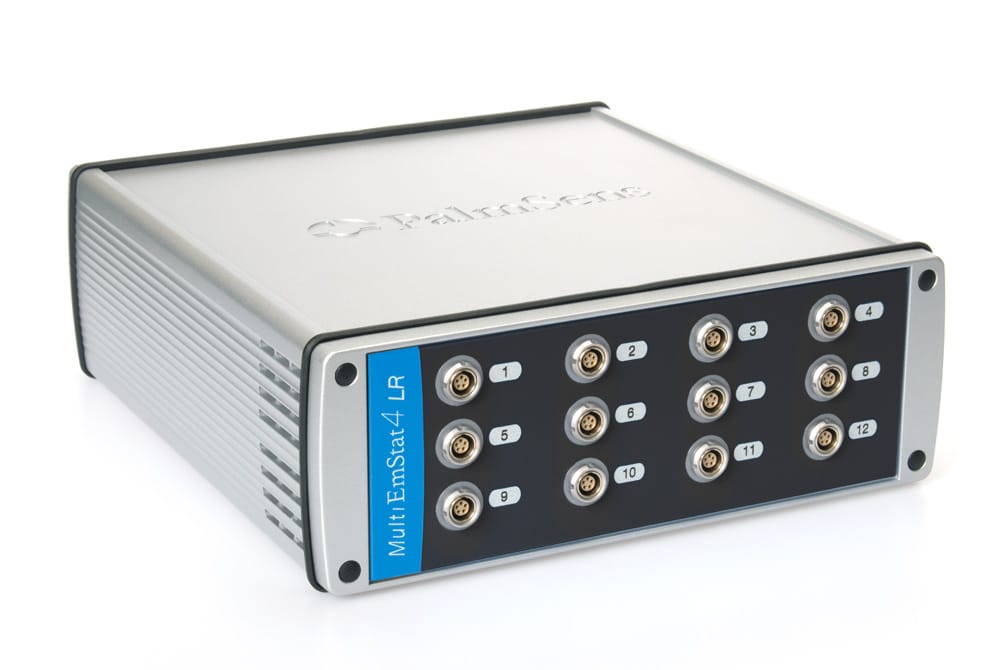
Three PalmSens setups cover most corrosion labs: the EIS Corrosion Package for everyday corrosion testing, the EIS Plus Corrosion Package for coatings and fieldwork, and the MultiEmStat4 for many samples in parallel. Both packages include a corrosion cell, cables, PSTrace software and the corrosion handbook.

Why corrosion is measured electrochemically
Most corrosion is an electrochemical process. At the metal surface an anodic reaction dissolves the metal, while a cathodic reaction such as oxygen reduction consumes the electrons that are released. Both currents are equal and opposite, so a corroding sample shows no net current on its own.
A potentiostat makes that hidden current visible. It shifts the sample slightly away from its corrosion potential and measures how the current responds. From that response you derive the corrosion current and the rate at which the metal is lost.
The same principle is used to compare alloys, test corrosion inhibitors and assess coatings, which is why electrochemistry has become a standard method in corrosion research.
The techniques a corrosion potentiostat needs to run
Corrosion research relies on a small set of techniques. Each one answers a different question about the metal or the coating, and a corrosion potentiostat should support all of them.
| Technique | What it tells you |
|---|---|
| Open circuit potential (OCP) | The corrosion potential of the sample, and whether it is stable before you start |
| Linear polarization (LPR) | The polarization resistance, measured close to the corrosion potential without damaging the sample |
| Potentiodynamic polarization and Tafel plot | Corrosion current, Tafel slopes and corrosion rate |
| Cyclic polarization | Susceptibility to pitting and the ability of the metal to repassivate |
| Electrochemical impedance spectroscopy (EIS) | Coating resistance and capacitance, water uptake, delamination and an estimate of time to failure |
| Zero resistance amperometry (ZRA) | The galvanic current between two different metals in contact |

Specifications that matter for corrosion work
Current range at both ends. A bare steel coupon in acid can draw milliamps, while current through an intact coating sits in the nanoampere range or lower. A corrosion potentiostat has to measure both with good resolution.
Maximum current. Large samples, aggressive electrolytes and polarization far from the corrosion potential all raise the current. Up to 200 mA covers most laboratory corrosion work.
For corrosion, the instrument has to measure the full range: milliamps on a bare coupon, nanoamps through an intact coating.
EIS frequency range. Coating behaviour shows up at low frequencies, often in the millihertz range, so the low end of the impedance analyser matters most. All instruments on this page reach down to 10 µHz.
Isolation from ground. ZRA measurements and samples that are connected to ground, such as installed structures, need a potentiostat that is not referenced to the same ground. Galvanic isolation, or a battery-powered instrument without a cable to the PC, solves this.
Corrosion software. Tafel analysis, corrosion rate calculation and equivalent circuit fitting should be part of the software, not a spreadsheet afterwards. PSTrace has a dedicated corrosion mode for this.
Which one fits your corrosion research
The EIS Corrosion Package is built around the EmStat4S HR. It runs every common corrosion technique including EIS up to 200 kHz and ZRA, delivers up to ±200 mA at ±6 V, and fits in the palm of your hand. For polarization curves without impedance, the Basic Corrosion Package uses the same instrument without the EIS module.
The EIS Plus Corrosion Package contains the PalmSens4. Its ±10 V range, current ranges down to 100 pA and EIS up to 1 MHz suit coating research, and its battery and Bluetooth connection make it the choice for measurements on site.
The MultiEmStat4 runs 4, 8 or 12 channels in parallel. That suits inhibitor screening, replicate samples and long coating tests, where one channel would keep an experiment waiting for weeks. Galvanic isolation is available per channel for ZRA.
| Specification | EIS Corrosion Package (EmStat4S HR) | EIS Plus Corrosion Package (PalmSens4) | MultiEmStat4 HR |
|---|---|---|---|
| Channels | 1 | 1 | 4, 8 or 12 |
| Potential range | ±6 V | ±10 V (or ±5 V) | ±6 V |
| Maximum current | ±200 mA | ±30 mA (typical) | ±200 mA per channel |
| Current ranges | 100 nA – 100 mA | 100 pA – 10 mA | 100 nA – 100 mA |
| EIS | 10 µHz – 200 kHz | 10 µHz – 1 MHz | 10 µHz – 200 kHz |
| ZRA | Yes | Yes | Yes, with galvanic isolation option |
| Power | USB-C | USB or internal battery, Bluetooth | USB, mains powered |
| Corrosion cell and handbook included | Yes | Yes | No |
Specifications as published on the PalmSens product pages.

Coating evaluation in 24 hours with REAP
Many coatings are still tested by exposing them to salt spray for months. The Rapid Electrochemical Assessment of Paint (REAP) shortens that to 24 hours.
REAP combines EIS with cathodic disbonding on a series of samples and extrapolates the long-term behaviour to an estimated time to failure. Because the method relies on several samples, a multi-channel instrument such as the MultiEmStat4 saves the most time here.
Corrosion monitoring outside the lab
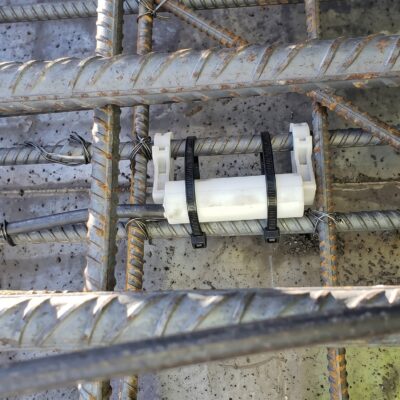
Bridges, pipelines and reinforced concrete corrode where they are, not in a beaker. The PalmSens4 runs on its internal battery and connects over Bluetooth, so a full corrosion measurement can be done on site and stored on the instrument.
For permanent installations that need to measure for months and report remotely, PalmSens builds dedicated corrosion monitors on its OEM modules, such as the EmStat Go and EmStat Pico.
Getting a quotation
The corrosion packages are quoted as a complete set: potentiostat, corrosion cell, cables, PSTrace software and the corrosion handbook. Multi-channel instruments are quoted per configuration, because channel count, current range and options such as EIS and galvanic isolation all change the price.
Describe the samples and techniques you plan to use, and the quotation will match what you actually need to measure.
Related pages
- Corrosion packages: the complete starter kits for corrosion research
- Corrosion knowledge base: theory, terms and techniques
- Portable potentiostat: battery-powered measurement outside the lab
- Multi-channel potentiostat: running several cells in parallel
- Potentiostat for advanced users: when the specifications start to limit your research
- Potentiostat: what a potentiostat is and how it works
Frequently asked questions
What does a potentiostat measure in corrosion testing?
It controls the potential of the metal sample against a reference electrode and measures the resulting current. From the current around the corrosion potential you calculate the corrosion current and corrosion rate.
Which electrochemical techniques are used for corrosion research?
The most common are open circuit potential, linear polarization, potentiodynamic polarization with Tafel analysis, cyclic polarization, electrochemical impedance spectroscopy and zero resistance amperometry.
How much current does a corrosion potentiostat need?
It depends on the sample area and the electrolyte. Up to 200 mA covers most laboratory corrosion work, while measurements on intact coatings need sensitive current ranges in the nanoampere range or below.
Do I need EIS for corrosion research?
For bare metals, polarization measurements are often enough. For coatings EIS is the main technique, because it shows coating resistance, water uptake and delamination without damaging the sample.
Why does ZRA need galvanic isolation?
A zero resistance ammeter measures the current between two metals that are electrically connected. The instrument must not add its own ground connection to that circuit, so it has to be floating.
Can corrosion be measured in the field?
Yes. A battery-powered potentiostat with wireless control, such as the PalmSens4, measures on site. For long-term remote monitoring, dedicated corrosion monitors are built on OEM potentiostat modules.