
Articles
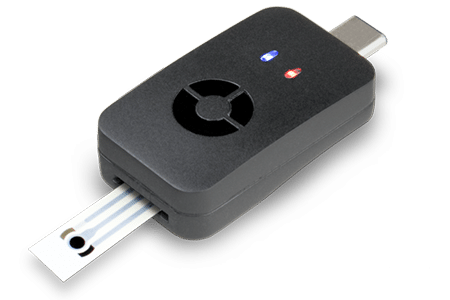
Demonstration of a ZP glucose biosensor with a PalmSens Sensit Smart
This webinar recording will show you a demonstration of a glucose biosensor designed by Z&P and powered by our Sensit Smart. The webinar consists of four parts: Introductio...

MethodSCRIPT Examples for the EmStat Pico MUX16 in Python
Use these MethodSCRIPT examples together with the "Getting Started with the Emstat Pico MUX16" guide.

Introduction to the Corrosion Research Knowledge Base
This knowledgebase contains all you need to understand potentiostats, electrodes and how to use them to perform for example coating research or analyze paint. It will give an intro...

Detection of Multiple Heavy Metals – PDF
Here you can download the electrochemical experiment based on the article series 'Detection of Multiple Heavy Metals by Stripping Voltammetry'. Have fun!
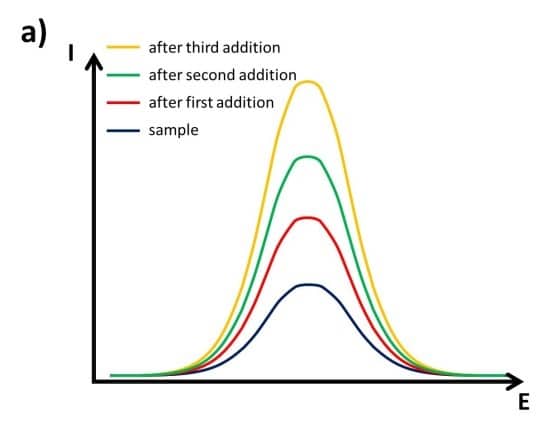
Detection of Multiple Heavy Metals 5/5 – The Standard Addition Analysis
This chapter is the last in the series ‘Detection of Multiple Heavy Metals by Stripping Voltammetry’. Another technique is discussed, namely the standard addition analysis.
Detection of Multiple Heavy Metals 4/5 – Stripping Analysis
This chapter is part of the series ‘Detection of Multiple Heavy Metals by Stripping Voltammetry’. In this chapter the theory on the analysis used in the corresponding experiment, namely stripping analysis, is explained.
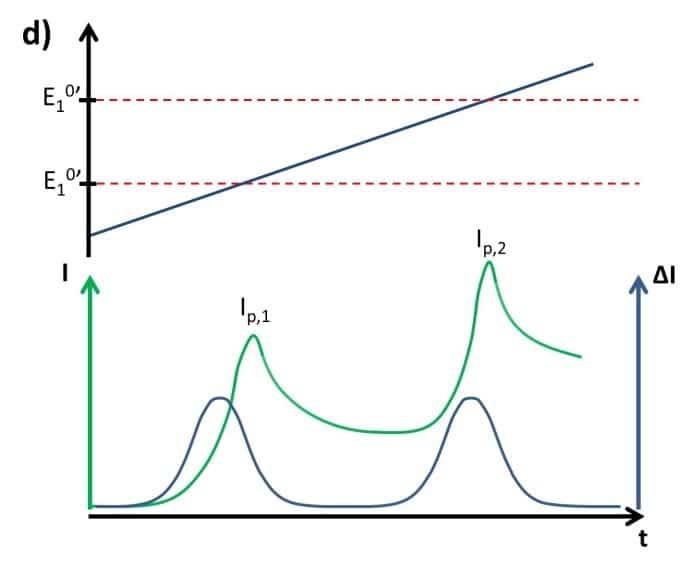
Detection of Multiple Heavy Metals 3/5 – Multiple Species Analysis with Square Wave Voltammetry
This chapter is part of the series ‘Detection of Multiple Heavy Metals by Stripping Voltammetry’. This chapter covers the basics of Square Wave Voltammetry.

Detection of Multiple Heavy Metals 2/5 – Why Care about Heavy Metals?
This chapter is the first in the series ‘Detection of Multiple Heavy Metals by Stripping Voltammetry’. This chapter highlights the relevance of heavy metal detection.
Detection of Multiple Heavy Metals 1/5- Introduction
For many lab technicians, quantitative analysis is an everyday task. Monitoring processes, product quality, etc. are common tasks for electrochemical analysis. With raising awareness of pollution, monitoring heavy metals in water reservoirs, pipes, rivers, etc. is getting more and more important. Heavy metals are very suitable for electrochemical detection and even very low concentrations can be measured. Quantification limits in the range of parts per trillion (ppt) have been demonstrated.
Electrochemical experiments for students
To familiarize students with electrochemical experiments, PalmSens has prepared six theoretical article series with corresponding experiments (in PDF). Each series includes instructional theory to understand the experiment, and the experiment describes a description of the equipment, sensors and chemicals you need.

Cyclic Voltammetry – PDF 3
Here you can download the third and final of three electrochemical experiments based on the article series 'Cyclic Voltammetry – the Most Used Technique'. This experiment is called 'Cyclic Voltammetry - Ferrocene-carboxylic Acid as a Mediator'. Have a blast!
Cyclic Voltammetry – PDF 2
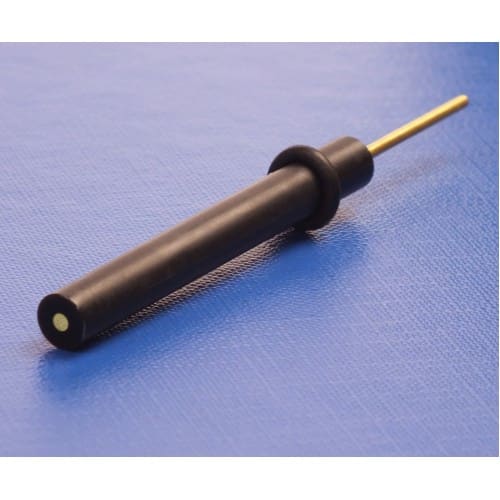
Here you can download the second of three electrochemical experiments based on the article series 'Cyclic Voltammetry – the Most Used Technique'. This experiment is called 'Cyclic Voltammetry - Investigation of a Gold Surface'. Good luck!

Cyclic Voltammetry – PDF 1
Here you can download the first of three electrochemical experiments based on the article series 'Cyclic Voltammetry – the Most Used Technique'. This experiment is called 'Cyclic Voltammetry - Theoretical Experiments'. Have fun!
Cyclic Voltammetry 4/4- Investigation of Catalytic Processes
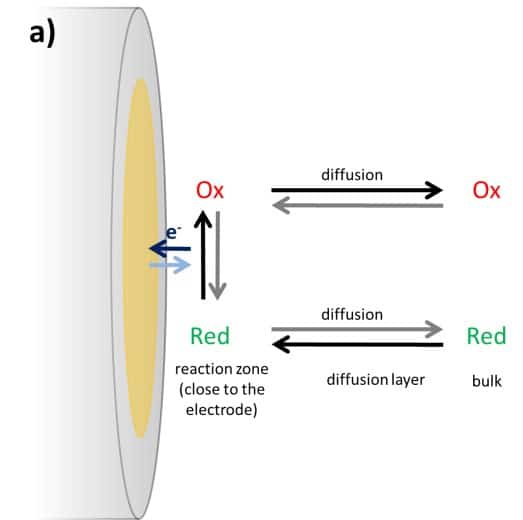
This chapter is part of the series ‘Cyclic Voltammetry – the Most Used Technique’. In this final chapter we delve into catalytic processes.
Cyclic Voltammetry 3/4- What Information Can a CV Provide?
This chapter is part of the series ‘Cyclic Voltammetry – the Most Used Technique’. Here we explain what information can be read from a cyclic voltammogram (CV) and how.
Cyclic Voltammetry 2/4- What is a Cyclic Voltammogram?
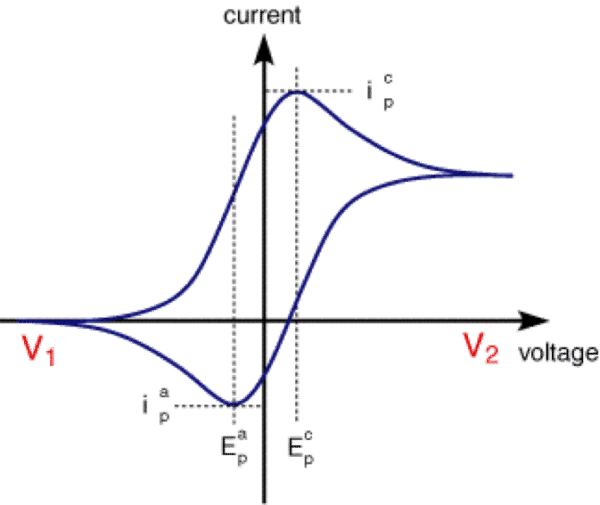
This chapter is the first part of the series ‘Cyclic Voltammetry – the Most Used Technique’. This introductory chapter goes into detail on cyclic voltammograms.
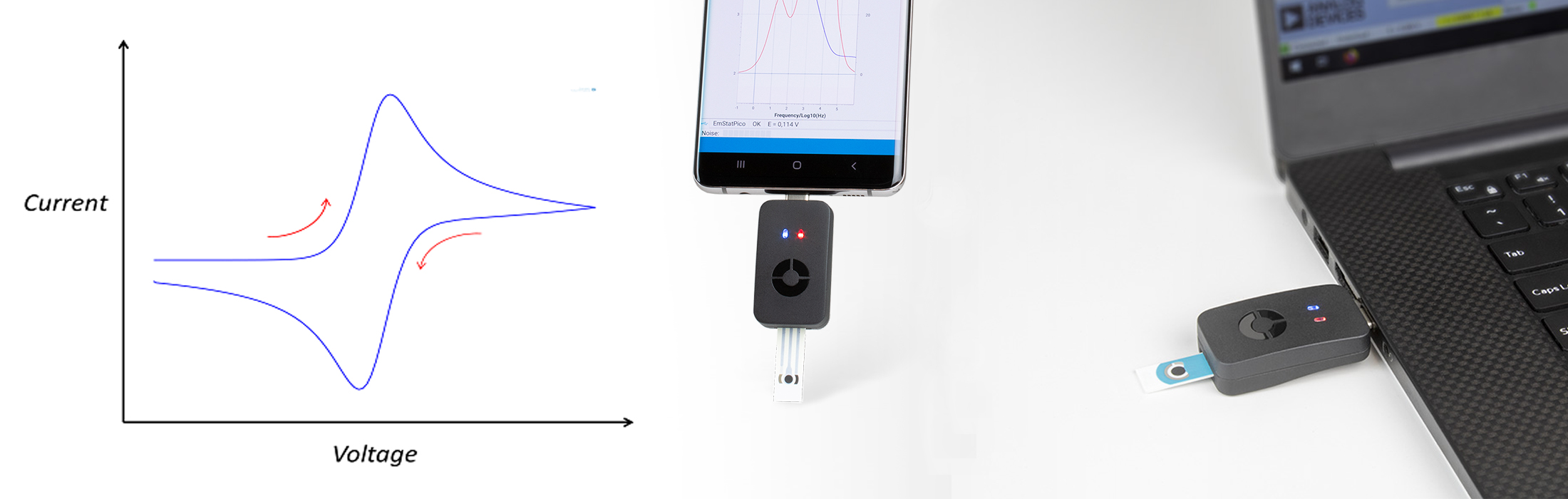
Cyclic Voltammetry 1/4- Introduction
Moving from passive potentiometric experiments to potentiostatic experiments by controlling the potential was an important development. However, the step that followed towards potentiodynamic experiments may have been even more important for modern electrochemistry. Potentiodynamic experiments made it easy to collect all the data needed for a plot of current I versus potential E. These plots are called a voltammogram and the technique used for measuring is called voltammetry. In a short period of time the cyclic voltammetry (CV) provides a lot of information and allows kinetic investigations. It is by far the most used technique by PalmSens customers. Experienced electrochemists read quite some information from the shape of a CV.
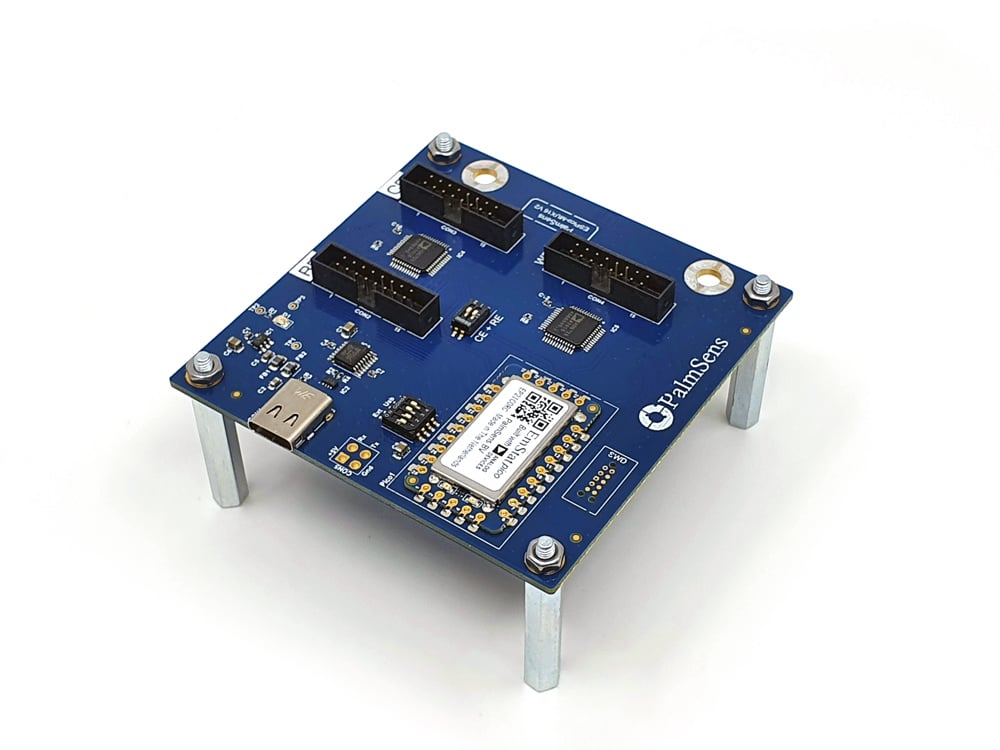
Getting Started with the Emstat Pico MUX16
This description explains how to address the MUX16, enable the MethodSCRIPT sandbox editor in PSTrace, customize MethodSCRIPT and perform your first measurement using our 16 resistor test cell.