
Electrochemistry explained
Articles
Detection of Multiple Heavy Metals 1/5- Introduction
For many lab technicians, quantitative analysis is an everyday task. Monitoring processes, product quality, etc. are common tasks for electrochemical analysis. With raising awareness of pollution, monitoring heavy metals in water reservoirs, pipes, rivers, etc. is getting more and more important. Heavy metals are very suitable for electrochemical detection and even very low concentrations can be measured. Quantification limits in the range of parts per trillion (ppt) have been demonstrated.

Electrochemical experiments for students
To familiarize students with electrochemical experiments, PalmSens has prepared six theoretical article series with corresponding experiments (in PDF). Each series includes instructional theory to understand the experiment, and the experiment describes a description of the equipment, sensors and chemicals you need.

Cyclic Voltammetry – PDF 3
Here you can download the third and final of three electrochemical experiments based on the article series 'Cyclic Voltammetry – the Most Used Technique'. This experiment is called 'Cyclic Voltammetry - Ferrocene-carboxylic Acid as a Mediator'. Have a blast!
Cyclic Voltammetry – PDF 2
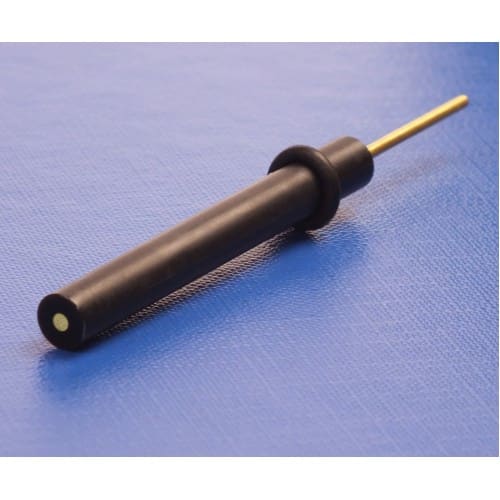
Here you can download the second of three electrochemical experiments based on the article series 'Cyclic Voltammetry – the Most Used Technique'. This experiment is called 'Cyclic Voltammetry - Investigation of a Gold Surface'. Good luck!

Cyclic Voltammetry – PDF 1
Here you can download the first of three electrochemical experiments based on the article series 'Cyclic Voltammetry – the Most Used Technique'. This experiment is called 'Cyclic Voltammetry - Theoretical Experiments'. Have fun!
Cyclic Voltammetry 4/4- Investigation of Catalytic Processes
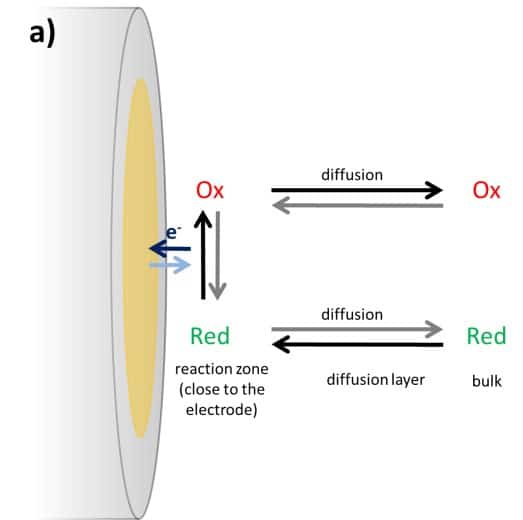
This chapter is part of the series ‘Cyclic Voltammetry – the Most Used Technique’. In this final chapter we delve into catalytic processes.
Cyclic Voltammetry 3/4- What Information Can a CV Provide?
This chapter is part of the series ‘Cyclic Voltammetry – the Most Used Technique’. Here we explain what information can be read from a cyclic voltammogram (CV) and how.
Cyclic Voltammetry 2/4- What is a Cyclic Voltammogram?
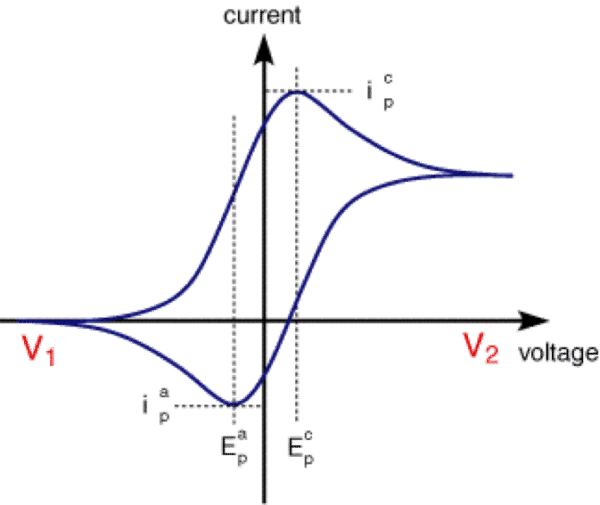
This chapter is the first part of the series ‘Cyclic Voltammetry – the Most Used Technique’. This introductory chapter goes into detail on cyclic voltammograms.
Cyclic Voltammetry 1/4- Introduction
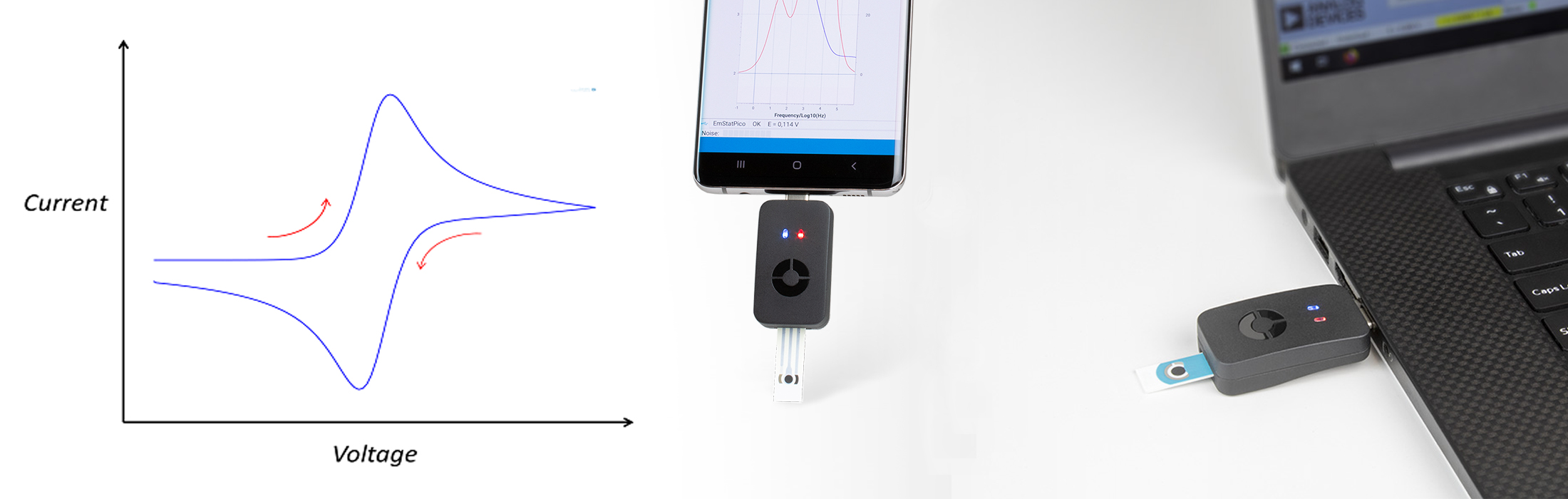
Moving from passive potentiometric experiments to potentiostatic experiments by controlling the potential was an important development. However, the step that followed towards potentiodynamic experiments may have been even more important for modern electrochemistry. Potentiodynamic experiments made it easy to collect all the data needed for a plot of current I versus potential E. These plots are called a voltammogram and the technique used for measuring is called voltammetry. In a short period of time the cyclic voltammetry (CV) provides a lot of information and allows kinetic investigations. It is by far the most used technique by PalmSens customers. Experienced electrochemists read quite some information from the shape of a CV.
The Cottrell Experiment and Diffusion Limitation – PDF
This PDF provides the instructions for the experiment related to the article series 'The Cottrell Experiment and Diffusion Limitation'. Have fun!
Copper and Nickel Deposition 3/3 – Electrogravimetry and the Electrochemical Series
This chapter deals with Electrogravimetry and the Electrochemical Series. Deposition of metals can also be used for analytical methods. The differences in the standard potentials allow individual precipitation of different metals in the same solution.
Copper and Nickel Deposition 2/3 – Corrosion research and corrosion protection
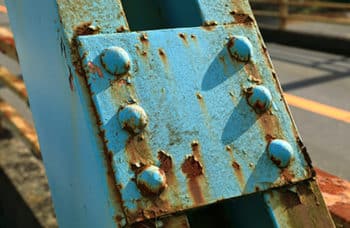
This chapter explains corrosion and methods to prevent it. Corrosion is an important research field due to the fact that corrosion causes big amounts of damage to machines and monuments. Understanding and preventing corrosion is the goal of corrosion research.
Copper and Nickel Deposition 1/3 – Introduction
This series of articles and corresponding experiment aims to provide an introduction to electrochemical experiments. This series in particular is meant to facilitate a transition from what is taught in most schools and the slightly more advanced level of potentiostatic experiments.
The Cottrell Experiment and Diffusion Limitation 3/3 – Electrochemical Double Layer
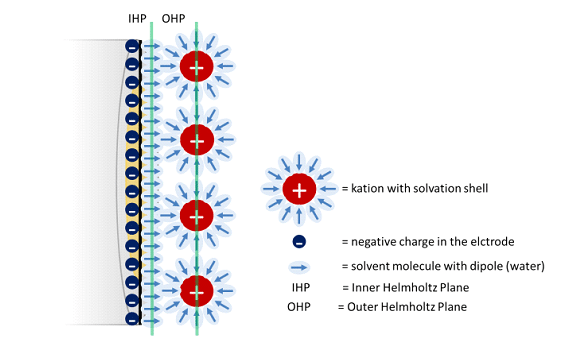
In this chapter the electrochemical double layer and its features are discussed. The electrochemical double layer acts as a capacitor and every change in the potential of the electrode will induce a capacitive charging current that is caused by physics not by a chemical reaction. This current decays exponentially.
The Cottrell Experiment and Diffusion Limitation 2/3 – The Cottrell Experiment
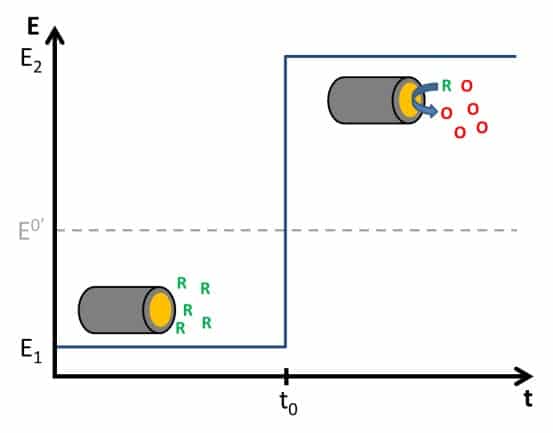
In this chapter, we discuss the Cottrell experiment. During the Cottrell experiment a potential step across a redox potential is applied and the current caused by the electrochemical reaction is recorded. The current is controlled by diffusion.
The Cottrell Experiment and Diffusion Limitation 1/3 – Introduction
This series of articles aims to provide an introduction to electrochemical experiments. This series in particular deals with the Cottrell experiment and diffusion limitation, and includes an experiment (PDF) you can carry out yourself.
Detection of Hydrogen Peroxide 5/5 – The Calibration Curve
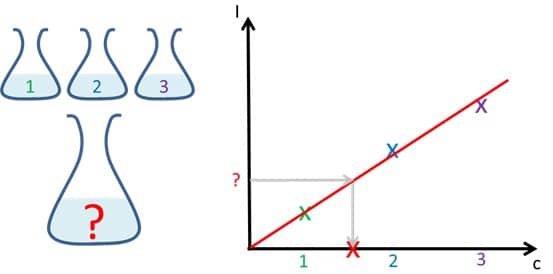
This chapter explains how to prepare and use a calibration curve.
Detection of Hydrogen Peroxide 4/5 – with Prussian Blue
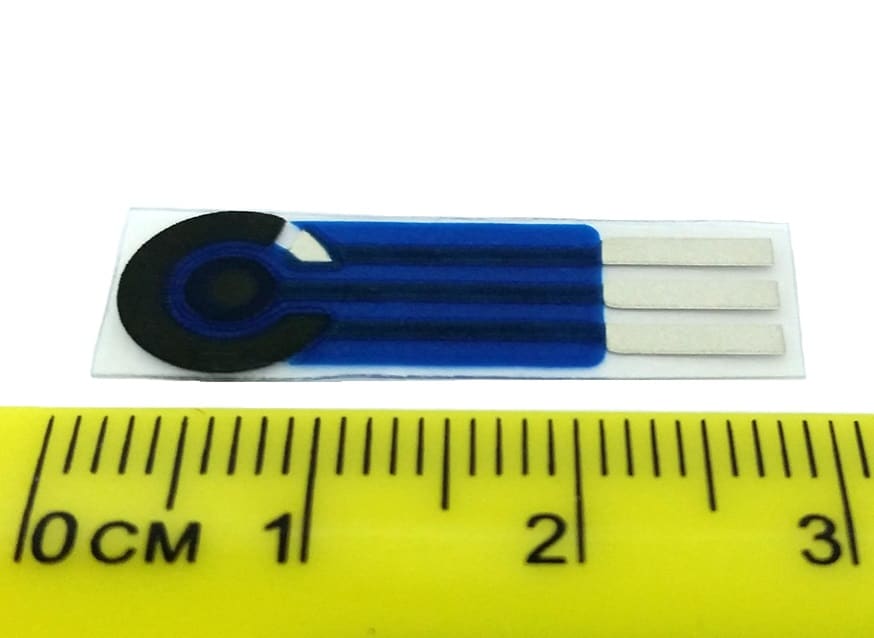
This chapter is part of the series ‘Detection of hydrogen peroxide with Prussian Blue’. This chapter delves deeper into the specifics of detecting hydrogen peroxide using Prussian Blue.